
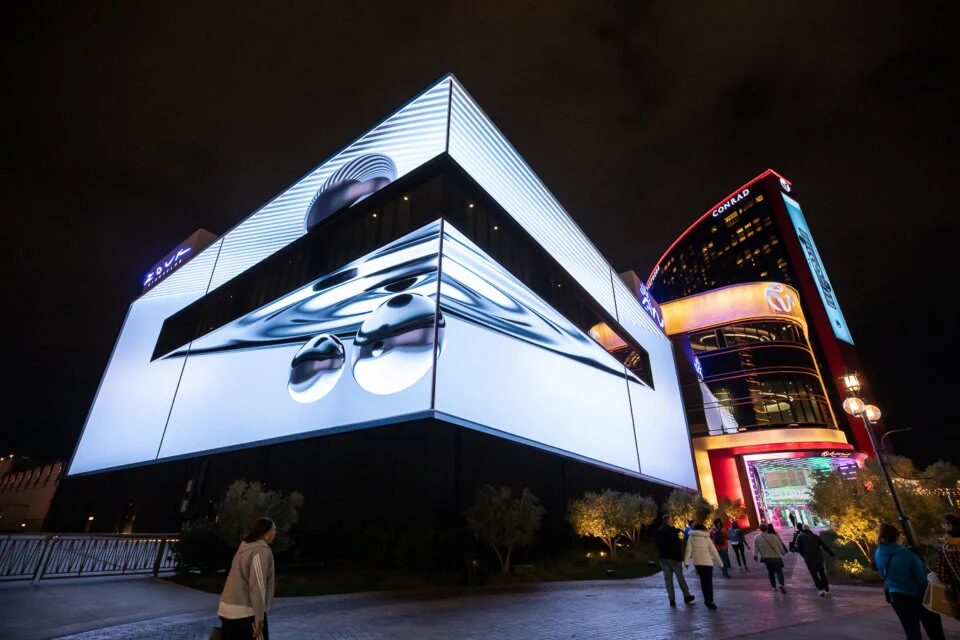








In modern LED display systems, the mechanical structure plays a decisive role in overall performance stability. When displays operate in transportation hubs, outdoor environments, or industrial installations, vibration becomes a constant challenge. Therefore, improving LED display vibration resistance is essential to ensure long-term visual consistency and system reliability. Aslled focuses on advanced structural and electronic integration solutions that enhance mechanical robustness in LED display systems.
Cabinet Structure Design and Load Distribution
First of all, cabinet design directly influences how vibration energy is absorbed and distributed. A well-designed frame reduces stress concentration and prevents deformation under continuous movement. Moreover, rigid aluminum alloy structures help maintain alignment between modules. As a result, the system maintains stable pixel positioning even under external vibration forces. In many applications, LED display vibration resistance improves significantly when engineers optimize cabinet geometry and reinforcement points.
Module Fixing and Mechanical Locking Systems
In addition, module fastening methods determine how securely LED panels stay in place during vibration exposure. Traditional weak locking systems often allow micro-movements that gradually lead to pixel misalignment or solder fatigue. Therefore, modern mechanical locking designs use precision-guided slots and multi-point fixation structures. Furthermore, these improvements reduce internal movement and enhance structural integrity, which directly strengthens LED display vibration resistance in dynamic environments.
PCB Mounting and Internal Support Optimization
Moreover, internal PCB mounting design plays a critical role in vibration protection. When boards are poorly supported, repeated vibration can stress solder joints and damage signal pathways. However, optimized support structures distribute mechanical stress evenly across the board surface. Consequently, electronic components maintain stable connections even under continuous vibration. In addition, Aslled applies reinforced mounting strategies to improve durability and ensure consistent system performance in demanding conditions.
Shock Absorption Materials and Buffer Design
Furthermore, vibration-resistant materials such as rubber dampers and shock-absorbing pads help reduce energy transfer from external structures to internal components. These materials act as buffers that minimize direct mechanical impact. As a result, sensitive electronic parts experience less stress and maintain stable operation over time. Therefore, LED display vibration resistance improves not only through rigid structures but also through intelligent material selection.
Solder Joint Reliability Under Mechanical Stress
In addition, solder joint strength directly affects long-term stability. Weak joints may crack under repeated vibration, leading to signal interruptions or display failure. Therefore, engineers use reinforced soldering techniques and optimized thermal profiles to improve bonding strength. Consequently, the display maintains electrical continuity even in high-vibration environments.
System-Level Integration and Design Synergy
Moreover, vibration resistance does not depend on a single component but on the entire system design. Cabinet structure, PCB layout, fastening methods, and material selection must work together. When these elements are properly integrated, the overall mechanical stability improves significantly. As a result, LED display vibration resistance reaches a higher level of reliability suitable for industrial and outdoor applications.
Conclusion: Engineering for Long-Term Stability
In conclusion, mechanical design plays a crucial role in enhancing LED display durability under vibration conditions. Through optimized cabinet structures, improved PCB mounting, shock absorption systems, and reliable soldering techniques, engineers can significantly reduce failure risks. Aslled delivers advanced LED display solutions that combine mechanical strength and electronic stability, ensuring consistent performance in challenging environments such as transportation systems, outdoor advertising, and industrial installations.